
THE UNLIKELY UNION
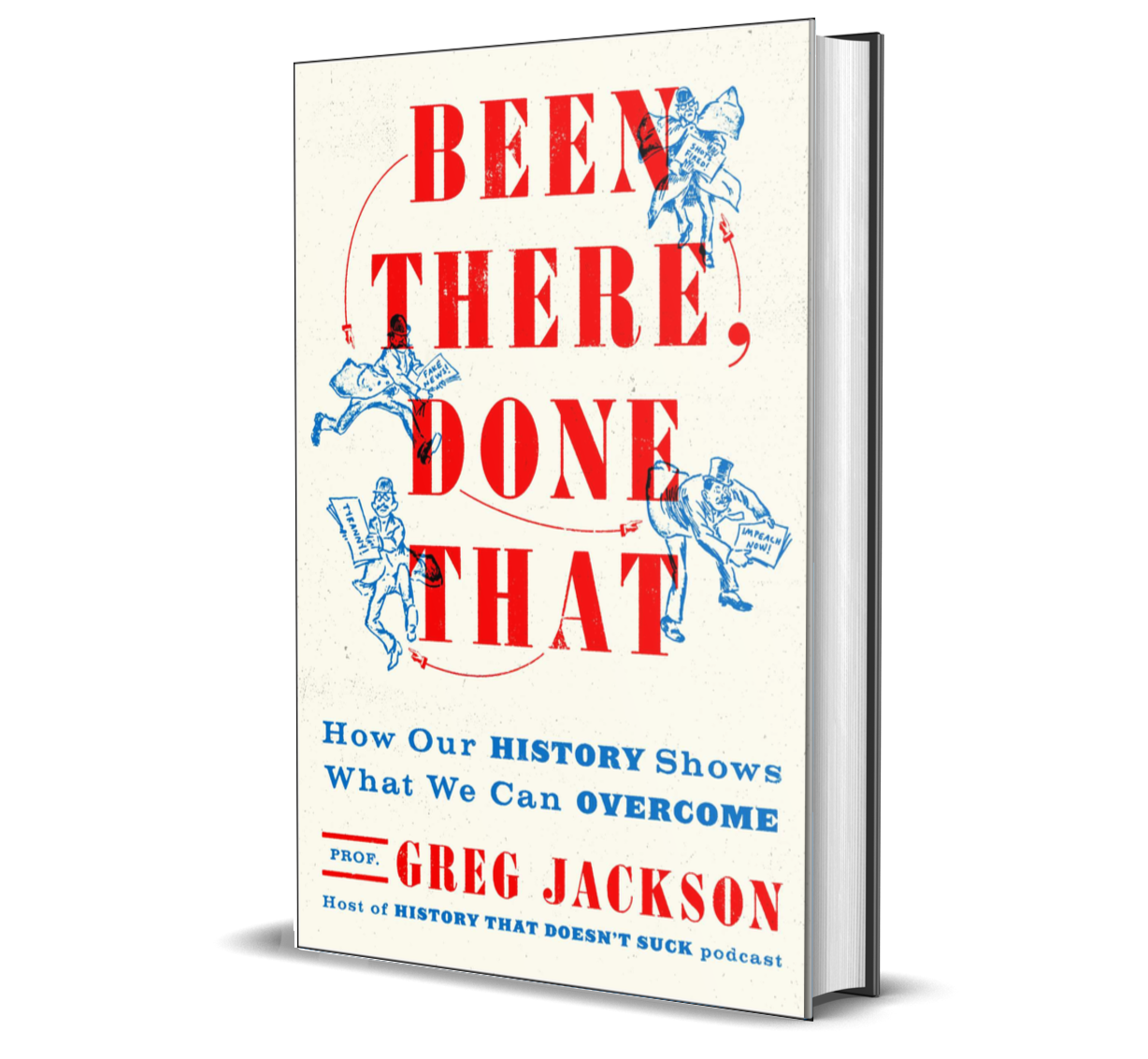
Been There, Done That: How Our History Shows What We Can Overcome
In the companion book, Prof. Jackson explores additional stories not covered in the live show. These chapters dive into topics such as political violence, fake news, and contested elections. It’s a candid yet hopeful history, to consider how principles that served us in the past can continue to serve us in the future, in pursuit of a more perfect union.
THE UNLIKELY UNION PROGRAM
ACT I
Chapter I: Game of Empires
It’s July 4, 1754. The mighty French and British empires are playing a game of chess with their colonies in North America. Young George Washington, in his first command of a colonial militia, stumbles into a dustup with French troops and their Native American allies, which inadvertently ignites a world war. Finding themselves pawns in the game, American colonists contemplate forming a "union."
Chapter II: Death and Taxes
Spoiler alert: Britain wins the war with France and gains disputed territories in North America. However, more territory means more problems, and Britain needs money. Parliament begins to tax the colonies for the first time ever, and the sparks of a revolution fly in New England.
Chapter III: The Rebel Alliance
The violence in New England has turned deadly for colonists and costly for Parliament. Parliament ups the ante in this game with its Coercive Acts to bring these rebellious colonies into line. “Americans,” as expressed by Patrick Henry, throughout the colonies are now sympathetic to Bostonians suffering under Parliament's levy and view the latest acts by Parliament as “intolerable.”
Chapter IV: The Empire Strikes Back
King George III doesn’t back down and views the colonies as blatantly rebellious; “blows must decide” the outcome. Colonial delegates from each state gather in Philadelphia. They debate fiercely on a course of action and ultimately declare independence for their "league of friendship," the United States.
Chapter V: United "Nations"
Now united, and with an assist from France, American colonies pull off an upset in overthrowing British rule to become their own nation. Okay, now what? How will they govern “the people”?
Chapter VI: We Hold These Truths?
The Declaration set a lofty vision for what this new union of nation-states will become. Rallying against a common foe is different than providing for the common good when ideals and economic interests collide.
Chapter VII: An Imperfect Union
The American union fractures from a divide that the founders never resolved because of positions that, James Madison had admitted less than a century earlier, were rooted “principally from their having or not having slaves.”
ACT II
Chapter VIII: From the Bloodiest Day to a Proclamation
Bloody, historic, horrible war rages. President Lincoln uses all the power granted a wartime Commander in Chief and finally ends the insidious institution at root in the divide: slavery.
Chapter IX: Total War and Politics
Lincoln overcomes formidable challenges to win a second term, but to win in war and politics he must become a “radical” leader.
Conclusion: Our Better Angels
“We are not enemies, but friends. We must not be enemies. Though passion may have strained, it must not break our bonds of affection...this broad land will yet swell the chorus of the Union, when again touched, as surely they will be, by the better angels of our nature.” -Abraham Lincoln